
Childfree Wellness

Honoring Autonomy, Prevention, and Whole Person Care
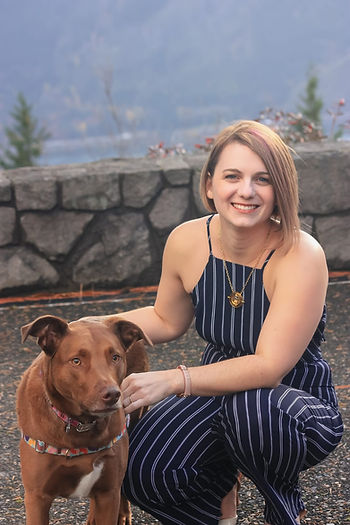
I want to begin this conversation personally, because this topic has shaped how I move through healthcare myself.
I have a family history of uterine cancer, which places me at increased risk. And yet, despite years of gynecologic care, I have never once had a physician initiate a conversation with me about the association observed in epidemiologic research between nulliparity and increased endometrial cancer risk, which matters because endometrial cancer is the most common type of uterine cancer.¹⁻³
There are likely multiple reasons for this silence. In some cases, it may reflect an implicit assumption of future motherhood, where pregnancy is treated not as one possible path, but as an expected inevitability. In other cases, it may reflect a lack of clinical emphasis and relatively limited research attention compared with better known risk factors. Unlike more widely taught risks such as obesity or unopposed estrogen exposure, nulliparity is not consistently highlighted in medical education or clinical guidelines, even though it shows up in population level studies.²⁻⁶
And to be clear, these assumptions have not always been subtle. At times they have been very blatant. Statements framed as reassurance or guidance have made it clear that my body was being viewed primarily through the lens of future motherhood. As someone who has been on the fence about having children for many years, that framing has felt confusing at best and deeply invasive at worst, particularly when conversations moved past real, present health risks that deserve attention now.
That gap between risk and recognition is one of the reasons childfree wellness matters so deeply to me.
What Childfree Wellness Means to Me
Childfree wellness is a naturopathic approach that centers your health as it is today, not as it might serve a future reproductive role. It honors the reality that some people are childfree by choice, some by circumstance, and many exist in the in between for years.
This approach recognizes that physical health, hormonal balance, emotional wellbeing, identity, and long-term disease prevention matter regardless of whether pregnancy is part of your life. Your wellness is not conditional on reproduction.
Your body is not a placeholder for a future role. It is worthy of thoughtful, preventive care now.
When Healthcare Assumes Motherhood
Much of women’s healthcare is built on a pronatalist framework, meaning motherhood is treated as the
default outcome. This cultural bias does not just live in social conversations. It shows up in medicine, in research questions, and in which risks get centered versus ignored.⁷
You can see it plainly in the way childfree women are talked about and talked to. In one recent qualitative study, a participant described the pressure this way: “I strongly reject the social and traditional imperative that every woman must be a mother.”⁸ That single sentence captures something I have felt in exam rooms. The assumption is not only that motherhood is preferred, but that it is inevitable.
When motherhood is assumed, prevention often becomes postponed.
The Overlooked Health Implications of Nulliparity
Nulliparity, defined as never having carried a pregnancy beyond 20 weeks, has been identified in epidemiologic research as a factor associated with several hormone-related cancers, most notably endometrial cancer, the most common type of uterine cancer, and breast cancer.¹⁻⁴ ⁹ Even so, nulliparity is rarely discussed proactively in routine care, particularly for people who are childfree or undecided.

Nulliparity and Endometrial Cancer Risk
Population based studies, pooled analyses, and meta analyses have observed higher endometrial cancer incidence among nulliparous women compared with women who have had one or more full term pregnancies.¹⁻⁴ Estimates vary by study design and population, but the overall pattern has been consistent enough that major cancer organizations include “never being pregnant” among endometrial cancer risk factors.³⁻⁴
The biology behind this association is more complex than it is often presented. It is tempting to reduce the story to one simple explanation, but current evidence supports a multifactorial view. Traditional hypotheses emphasized progesterone exposure during pregnancy counterbalancing estrogen driven proliferation of the endometrium. More recent discussions highlight that pregnancy related risk reduction likely reflects a combination of lifetime hormonal exposure patterns plus immune, inflammatory, and tissue level changes associated with pregnancy and childbirth.² ⁵ ⁶
It is also important to clarify a common misconception. Pregnancy does not protect against endometrial cancer simply because the uterine lining does not shed during gestation. Reduced lifetime menstrual cycling may contribute, but available evidence does not support that as a complete explanation. The mechanisms remain an active area of research.² ⁵ ⁶
What is well established is that prolonged exposure to unopposed estrogen, meaning estrogen without sufficient progesterone, increases endometrial cancer risk.⁵ ⁹ This includes both endogenous estrogen exposure and exogenous sources such as estrogen only menopausal hormone therapy.⁵ ⁹ In clinical reality, risk often stacks. Conditions such as PCOS, insulin resistance, and higher body weight are also linked with higher endometrial cancer risk, which is part of why individualized prevention conversations matter so much.⁵⁻⁶ ⁹
When these topics are skipped because pregnancy is assumed, that is not just frustrating. It can be a missed opportunity for prevention.
Nulliparity and Breast Cancer Risk

Nulliparity is also a well established risk factor for breast cancer, especially when compared with having a first full term birth at a younger age. In a large aggregated analysis of four US prospective cohorts, nulliparous women had a 20 to 40 percent higher risk of postmenopausal breast cancer compared with women who had their first birth before age 25.⁹
The proposed biology here is distinct from that of the uterus. Pregnancy appears to induce long lasting maturation and differentiation of breast tissue, along with durable molecular and epigenetic changes that may reduce susceptibility to malignant transformation over time.¹⁰⁻¹²
I like to frame this gently but clearly. You do not need to become a mother to have a meaningful life. And you also deserve to have honest, nonjudgmental conversations about what your personal risk factors may be, so you can decide what prevention means for you.
Bias in Research and Health Narratives About Childfree Women
It is important to name an uncomfortable truth. Research itself is not immune to cultural bias.
Randomized controlled trials assigning people to parenthood are not ethical or feasible. Much of what we know about childfree health outcomes comes from observational, long term cohort studies, which can be deeply shaped by social context and stigma.¹³
A foundational layer of bias appears in the very language used to describe people who have not had children. In much of the medical and epidemiologic literature, nulliparous populations are routinely labeled as “childless,” a term that subtly frames the absence of children as a deficit rather than a neutral life circumstance. Language shapes perception, and when research terminology implies lack or loss, it can influence how outcomes are interpreted and compared. This framing risks positioning parenthood as the default standard of health and fulfillment, while implicitly casting childfree lives as incomplete or inherently disadvantaged. When such assumptions are embedded at the level of terminology, they can quietly shape revealed conclusions, research questions, and clinical attitudes long before individual data are ever analyzed.
Several longitudinal studies suggest that childless women report poorer physical and mental health during peak reproductive years. However, many of these same studies show that this pattern often reverses later in life, with older childfree women demonstrating comparable or sometimes better wellbeing, particularly when education, autonomy, and social connection are strong.¹⁴⁻¹⁵
Importantly, some authors explicitly acknowledge that poorer outcomes among childless women may reflect social marginalization, stigma, and unmet support needs, rather than intrinsic health deficits associated with not having children.13-14, 17 In other words, the risk is not childfreedom itself. The risk is being unsupported, dismissed, or excluded from care and social structures that reflect one’s lived reality.
What matters to me is how often these outcomes are intertwined with social conditions. Reviews emphasize that the relationship between parenthood, childlessness, and wellbeing depends on context such as partnership status, gendered expectations, and social support.¹³ When stigma and social exclusion are layered on top of healthcare dismissal, it becomes very hard to separate biology from culture.
That is exactly why childfree wellness has to be both medical and cultural. We can talk about hormones, screening, and risk. And we also have to talk about the lived reality of navigating a world that often treats motherhood as the default.

Being Taken Seriously in Preventive Care
When healthcare assumes motherhood, preventive conversations can shift away from present day risks. Discussions about cancer screening, hormone regulation, and long-term health planning may be delayed or deprioritized under the assumption that pregnancy will eventually change the picture.
These assumptions can also unintentionally harm people who have experienced miscarriage or early pregnancy loss. When motherhood is treated as inevitable, the physical and emotional realities of pregnancy loss are often minimized or bypassed entirely. Grief may go unrecognized. Bodies may be expected to move on quickly. And individuals may be left without adequate support at precisely the moment they need it most.
In these moments, silence can be deeply invalidating. When loss is not named and support is not offered, people can feel invisible, unseen, or as though their experience does not count because it did not result in a living child. This is not only emotionally harmful, but can also lead to gaps in follow-up care, hormonal support, and long-term health planning.
Childfree wellness challenges that model.
Here, preventive care is not postponed. Risk factors such as nulliparity, family history, PCOS, metabolic health, and personal values are addressed directly and thoughtfully. Emotional health, identity exploration, grief including grief related to pregnancy loss, and boundary setting are treated as legitimate clinical concerns, not side notes.
This is care that recognizes that reproductive experiences are complex, and that health deserves attention regardless of outcome.
What Childfree Wellness Care Can Include
Care is always individualized, but may include
Hormone and menstrual support for PMS, PCOS, irregular cycles, or post-pregnancy hormonal shifts after miscarriage or early pregnancy loss
Contraception counseling including short-term, long-term, or permanent options, approached with respect for bodily autonomy and personal readiness
Cancer risk education that supports informed, values-based decision making
Conversations about earlier or higher-intensity cancer screening when appropriate, including imaging options based on personal and family history and standard guidelines³⁻⁵
Discussion of genetic testing and referral for genetic counseling if you want to explore inherited risk, especially with a significant family history or elevated concern⁵
Nutrition and movement strategies for long-term metabolic, hormonal, and emotional health
Emotional support for grief, including grief related to miscarriage or pregnancy loss, decision fatigue, identity exploration, and societal pressure
Personalized wellness plans grounded in your values, lived experience, and goals, not assumptions about reproduction
This is care that treats your life as whole and complete exactly as it is.
Honoring Your Path Fully
Being childfree does not make your health less important. It makes intentional, affirming care even more essential.
You deserve a provider who sees you as you are, speaks honestly about risk, respects your autonomy, and supports your long term wellbeing without projecting an expected future onto your body.
Let’s build a version of wellness that fits you.
Let's build a version of wellness that fits you.
Let’s talk! Schedule an appointment to explore your options in a supportive, holistic setting.

References:
Cote ML, Ruterbusch JJ, Olson SH, Lu K, Ali-Fehmi R. The growing burden of endometrial cancer: a pooled analysis of risk factors in Black and White women. Cancer Epidemiol Biomarkers Prev. 2014.
Katagiri R, Matsuo K, et al. Reproductive factors and endometrial cancer risk in a pooled analysis of cohort studies. JAMA Network Open. 2023.
Wu QJ, Li YY, Tu C, et al. Parity and endometrial cancer risk: a meta analysis of epidemiological studies. Scientific Reports. 2015.
American Cancer Society. Endometrial cancer risk factors. Updated February 28, 2025.
National Cancer Institute. Endometrial Cancer Prevention (PDQ). Updated April 10, 2025.
Brinton LA, Felix AS. Menopausal hormone therapy and risk of endometrial cancer. J Steroid Biochem Mol Biol. 2014.
Gillespie R. Childfree and feminine: understanding the gender identity of voluntarily childless women. Gender and Society. 2003.
İyiaydın AA. Womanhood bound to motherhood: choosing childlessness in Türkiye. BMC Women’s Health. 2025.
Schonfeld SJ, Pfeiffer RM, Lacey JV Jr, et al. Hormone related risk factors and postmenopausal breast cancer among nulliparous versus parous women: an aggregated study. Am J Epidemiol. 2011.
Barton M, Santucci-Pereira J, Russo J. Molecular pathways involved in pregnancy induced protection against breast cancer. Front Endocrinol (Lausanne). 2014.
Feigman MJ, et al. Pregnancy reprograms the epigenome of mammary epithelial cells. Cell Reports. 2020.
Slepicka PF, Cyrill SL, Dos Santos CO. Pregnancy and breast cancer: pathways to understand parity protection. Trends Cancer. 2019.
Umberson D, Pudrovska T, Reczek C. Parenthood, childlessness, and well being: a life course perspective. J Marriage Fam. 2010.
Graham ML, Hill E, Shelley JM, Taket AR. Is being childless detrimental to a woman’s health and well being across her life course? Women Health. 2015.
Graham ML, Shelley JM, Taket AR. An examination of the health and wellbeing of childless women. BMC Public Health. 2011.
Cwikel J, Gramotnev H. Never married childless women in Australia: health and social circumstances in older age. Soc Sci Med. 2006.
Kendig H, Dykstra PA, van Gaalen RI, Melkas T. Health of aging parents and childless individuals. J Aging Health. 2007;19(1):145–168.


Comments